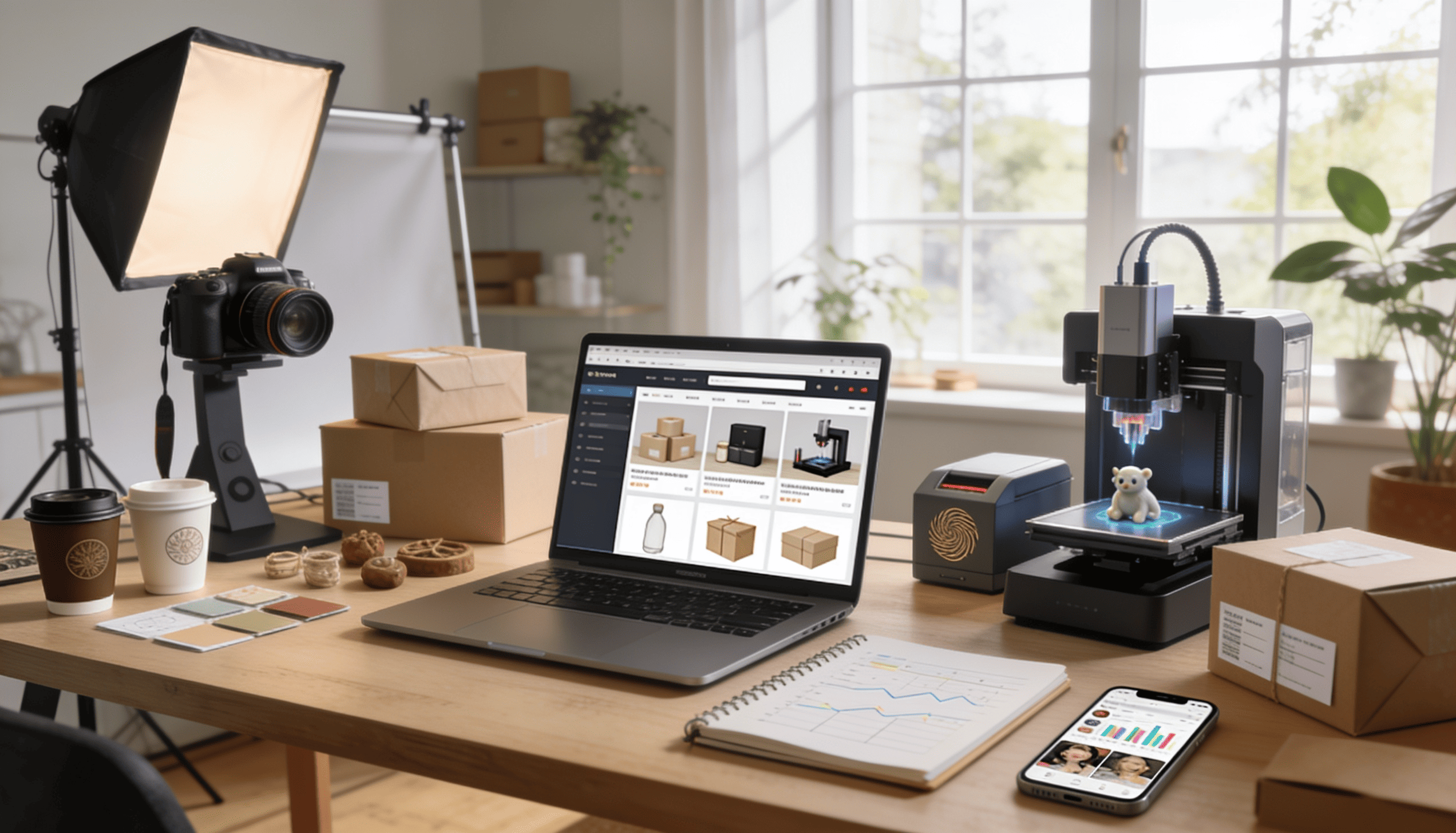
For beginner entrepreneurs and private investors in Uzbekistan, a starting capital of up to $3000 opens up opportunities to enter the actively developing small business sector. The digitalization of payment systems and transparent tax conditions - for example, a simplified tax system with a 4% rate on revenue for individual entrepreneurs (IP) - significantly simplify bookkeeping.
When choosing a direction, the autonomy of processes becomes a key factor. The ability to monitor operational activities remotely, from home or from any place with internet access, allows for the effective allocation of personal time and combining the project with primary employment. Below is a detailed overview of five current business models for implementation in Tashkent, Samarkand, Bukhara, and other regions of the country.
Overview of Current Business Models up to $3000
- Digital Island for Express Printing and Micro-Services The model is built on providing copying, laminating, document printing, and instant photo services in areas with high local traffic. A budget of up to $3000 covers the purchase of a professional multifunction printer (MFP), a photo printer, a starter kit of consumables, and the lease of a small space. Modern laser MFPs support cloud accounting systems, allowing the owner to remotely track the exact number of printed pages and control paper and toner consumption through a personal account, minimizing the need for a constant presence.
- Self-Service Coffee Machines The micro-coffee shop self-service direction is actively developing due to the absence of costs for staff members. Within the established budget, a modern coffee machine operating on real beans is purchased. Remote management is implemented through telemetry modules: notifications about water levels, remaining coffee beans, milk, and cups are sent to the owner's smartphone. It is sufficient for the entrepreneur to visit the point only for cash collection and refilling, while the entire financial flow is tracked remotely.
- Online Rental of Specialized Equipment Organizing a short-term rental service for in-demand tools - professional cleaning equipment (carpet extractors, steam cleaners) or construction equipment. Capital is invested directly into building the technical fleet. Order placement, verification of client documents, and payment are completely transferred to an online format. Delivery of equipment to the customer and its return can be carried out through partner courier services, allowing the owner to coordinate all processes without leaving home.
- Niche Online Store (E-commerce) Launching an online trading platform with a focus on a narrow and high-margin product category (smart gadgets, accessories, specialized home goods). Finances are distributed between creating a user-friendly storefront, purchasing a test batch, and marketing promotion. The model is oriented towards complete remoteness: order processing, communication with clients, and setting up ad campaigns happen via computer or smartphone, while storage and shipping can be delegated to third-party logistics operators.
- Aquabox Automated Drinking Water Vending Systems Investments in the infrastructure of automated purified drinking water sales close the daily basic need of residents in residential areas and large residential complexes. Aquabox equipment connects to the local water supply network and performs deep 8-step water purification, ensuring stable product quality for the final consumer. This direction is designed as a fully autonomous digital element of the urban environment, the management of which is integrated into a remote format.
Features of Remote Control in the Aquabox Model
The technological component allows for the integration of this model into the concept of home business management:
- IoT Monitoring: The built-in IoT platform transmits all operational data in real time. The entrepreneur sees current sales volumes, the technical condition of filters, and the system fill level from their smartphone.
- Fintech Systems Integration: Financial flows are fully digitized and linked to national payment tools Payme and Uzum. Each transaction is instantly displayed in the accounting system, eliminating manual bookkeeping and the need for frequent visits for cash collection.
- Additional Digital Monetization: The presence of a built-in bright LED screen allows the machine to be used as a DOOH advertising unit. Setting up advertising streams and managing content on the screen are carried out remotely through the media platform of partner Muna Media, adding another remote income source.
- Localized Service: The production of equipment directly in Uzbekistan ensures constant access to components and consumables. The automatic notification system itself reports the scheduled update of purification components, which optimizes the maintenance schedule.
Economic Parameters of the Model
- Initial CAPEX: Within $3000 (includes equipment cost, delivery, and connection at the location).
- OPEX Structure: Low operational expenses consisting of utility payments and scheduled filter replacements.
- Payback Period (ROI): Due to the combination of stable demand for water and income from the LED screen, the average estimated investment return period is from 5 to 9 months.
- Environmental Aspect: The use of reusable containers reduces the volume of plastic waste, which ensures a loyal attitude from local administrations and private homeowners associations (TChSZ).
Developing any of these five areas within a budget of up to $3000 allows for the launch of a functioning project, the key processes of which are digitized and available for monitoring in a remote mode.