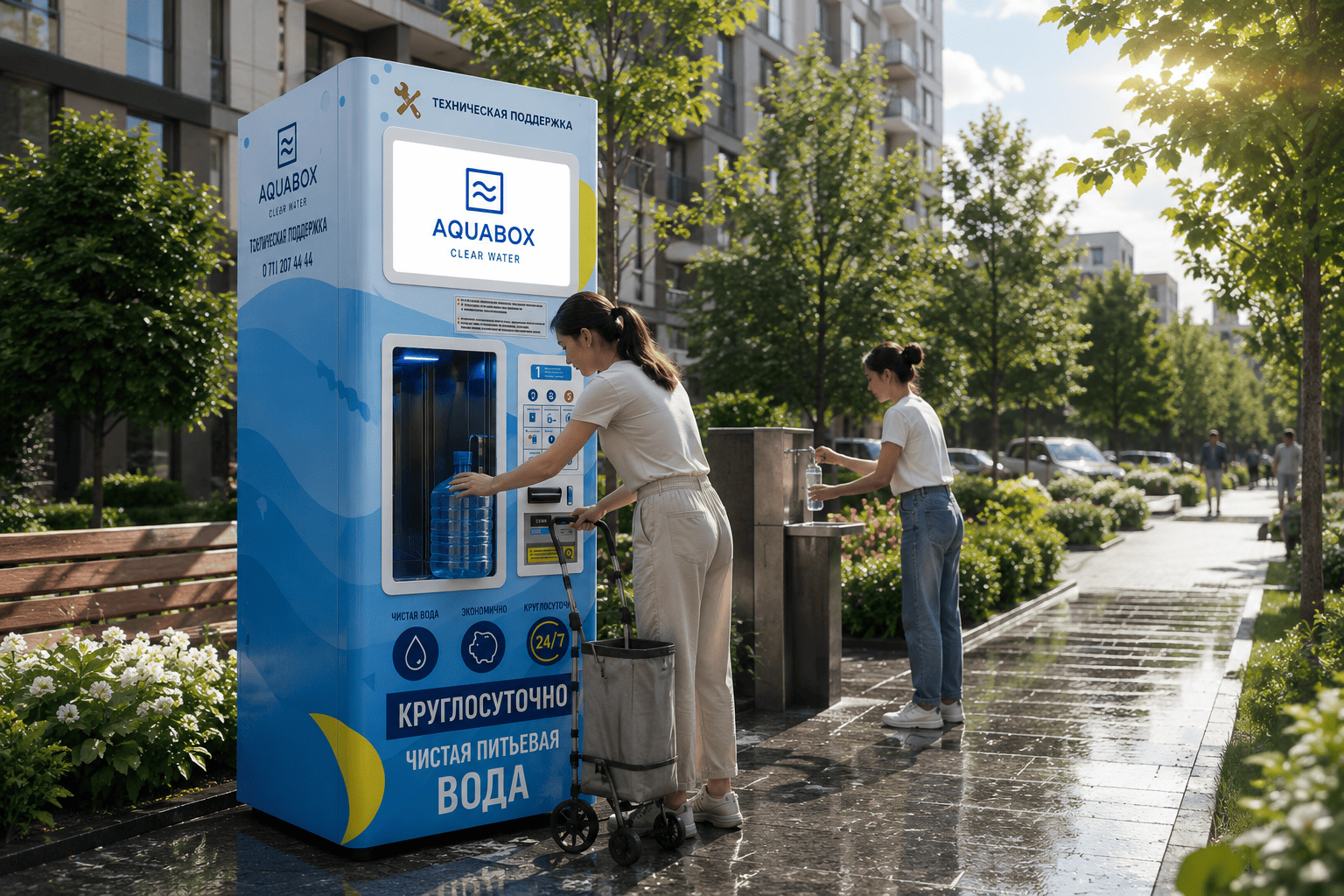
When launching any vending business, the key factor for success is location. In conditions of dense urban development in Tashkent, Samarkand, and other major centers, the classic search for spaces often runs into administrative barriers, high rental costs, and resistance from management companies.
However, in 2026, the vector has shifted toward environmental and social responsibility (ESG). Projects that bring direct benefits to residents and reduce the load on urban infrastructure receive priority. Automated drinking water purification and sale stations Aquabox have become an example of how a business model can organically integrate into local communities - mahallas and TChSZ (private homeowners associations), providing the investor with the loyalty of administrations and access to the best locations.
Social Demand for Clean Water Near Home
The quality of communal water supply and the wear and tear of main networks remain an active challenge for many residential areas. Residents of high-rise buildings are forced either to use domestic filters with frequent cartridge replacements or to regularly purchase bottled water in supermarkets, overpaying for plastic packaging and brand marketing.
The appearance of an autonomous Aquabox machine within walking distance solves this problem directly. Residents get constant access to water that has passed an 8-step filtration system (including reverse osmosis and mineralization) at a fair price. For the leadership of TChSZ and mahalla committees, installing such a station is a quick way to improve the level of development of the entrusted territory without attracting budget funds.
Why Administrations Approve Installation Without Unnecessary Bureaucracy
Management structures willingly cooperate with entrepreneurs developing the Aquabox network for several pragmatic reasons:
- Reduction of plastic waste: The vending model stimulates a culture of using reusable containers. Residents come with their own bottles, which cardinally reduces the volumes of discarded PET plastic. For TChSZ, this means a reduction in the volume of garbage in yards and lower costs for its removal.
- Additional income for improvement: An official lease agreement for one square meter of land under the machine brings regular targeted contributions to the TChSZ budget. Management companies can direct these funds to renovate entrances, landscape yards, or install playgrounds.
- Minimal technical requirements: The Aquabox station occupies only 1 sq. m, has an aesthetic modern design, and is neatly mounted on the ends of buildings or near entrances. Electricity and water consumption are recorded by separate certified meters, which excludes any disputes over utility bills.
Managing an Eco-Business Without Leaving Home
The most important feature of the Aquabox model for an investor is the ability to coordinate the operation of the entire network remotely. Location approval and physical installation of equipment happen once, after which the project switches to a fully autonomous mode.
- IoT Analytics: The business owner sees the exact volume of water sold, the remaining resource of each filter, and the overall technical condition of the units via a personal account from a smartphone or computer.
- Digitized Accounting: Direct integration with fintech platforms Payme and Uzum ensures instant cashless settlement. Every soum arrives at the company's settlement account automatically. The investor does not need to hire cash collectors or spend time on personal cash collection.
- Remote Digital Marketing: Stations are equipped with bright external LED displays used as advertising spaces. Content uploading and launching partner ads are carried out distantly through the cloud system of media partner Muna Media. Advertising income allows completely capitalizing the costs of renting a square meter from the TChSZ.
- Localized Service: Since Aquabox production is inside the country, any technical regulations and filter element updates occur according to established algorithms, minimizing the personal involvement of the owner in routine processes.
Investing in projects that cover basic environmental and social needs of the population opens access for entrepreneurs to stable and protected locations in the residential sector of Uzbekistan. While classic retail and the service sector face complex negotiations over commercial rent, Aquabox automated stations occupy the best spots in yards due to their ecological utility, providing the owner with an autonomous and transparent source of income with remote control of all business metrics.